
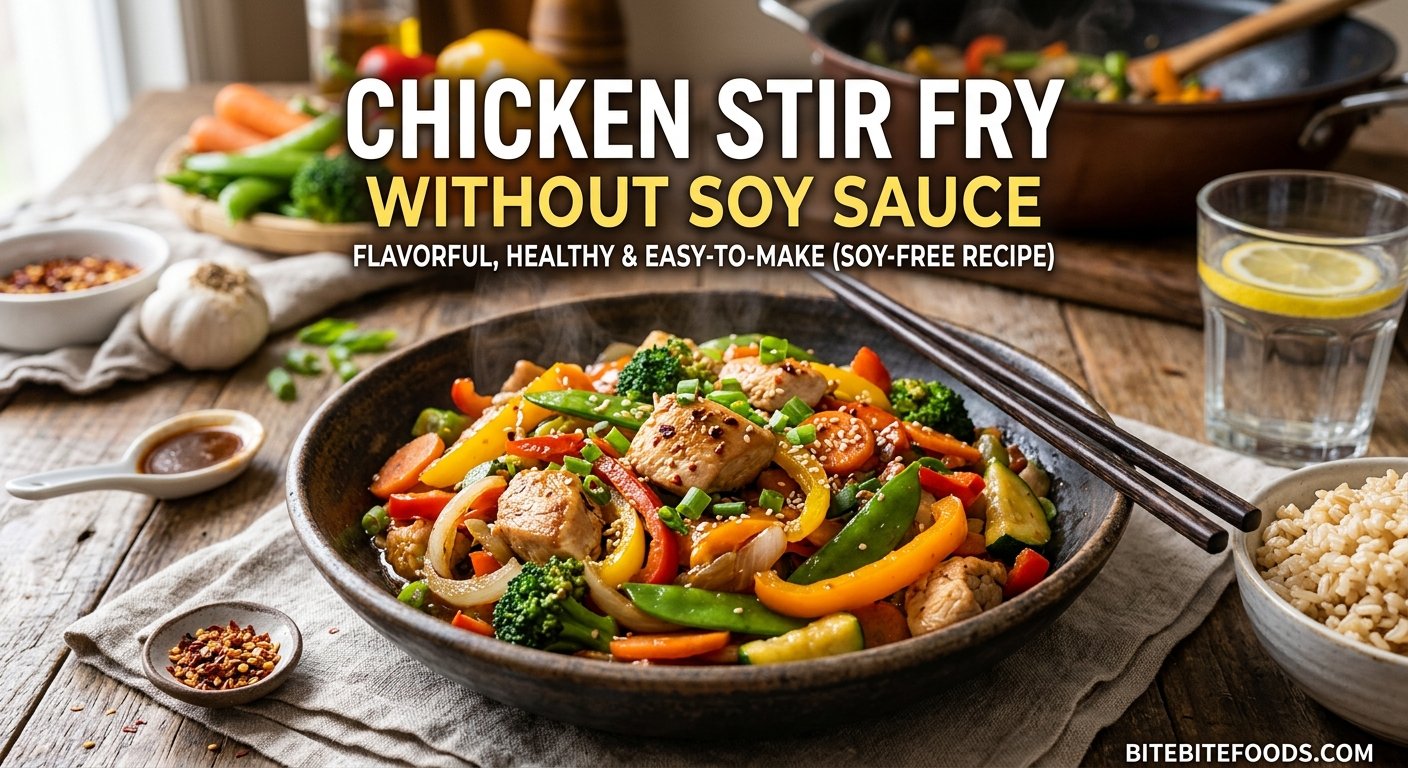
Chicken Stir Fry Without Soy Sauce: Easy, Flavorful, and Healthy Recipe

If you love homemade Asian-inspired meals but want to avoid soy sauce, this chicken stir fry without soy sauce is an easy and delicious recipe to add to your weekly dinner rotation. It features tender chicken, colorful vegetables, fresh garlic, ginger, and a savory homemade sauce that brings everything together without relying on traditional soy sauce.
The best part is that you do not need special ingredients or complicated cooking techniques. With a few pantry staples, one skillet, and about 30 minutes, you can prepare a satisfying meal that tastes fresh, flavorful, and better than many takeout options.
Whether you avoid soy sauce because of an allergy, dietary preference, or simply because you have run out, this recipe offers a practical alternative. The homemade sauce creates a delicious balance of savory, tangy, and slightly sweet flavors, while the vegetables add color, texture, and freshness.
Serve this easy chicken stir fry over steamed rice, noodles, or cauliflower rice for a simple dinner the whole family can enjoy.
Why You Will Love This Chicken Stir Fry Without Soy Sauce
There are plenty of reasons to make this chicken stir fry part of your regular meal plan.
1. No soy sauce required
Traditional stir fry recipes often depend on soy sauce for their salty, savory flavor. This version uses chicken broth, garlic, ginger, vinegar, and a few everyday seasonings to create a satisfying sauce without soy sauce.
2. Quick and easy preparation
This recipe is perfect for busy evenings. Once the ingredients are chopped, the chicken and vegetables cook quickly in a hot skillet.
3. Customizable vegetables
You can use broccoli, bell peppers, carrots, snap peas, mushrooms, cabbage, or frozen mixed vegetables. Choose whatever you already have in your refrigerator.
4. A homemade alternative to takeout
You control the ingredients, seasoning, sweetness, and thickness of the sauce. It is an excellent option when you want a homemade meal without ordering restaurant food.
5. Perfect for meal preparation
Cook a larger batch and divide it into containers with rice or noodles. It makes convenient lunches and dinners for the next few days.
6. Easy to adapt
You can make this recipe spicy, slightly sweet, low in added sugar, or packed with extra vegetables. It is easy to adjust the ingredients to suit your preferences.
What Does Chicken Stir Fry Without Soy Sauce Taste Like?
You might wonder whether chicken stir fry can taste good without soy sauce. The answer is yes, because a flavorful stir fry depends on more than one ingredient.
Garlic and ginger provide an aromatic base, while chicken broth adds moisture and savory depth. A small amount of vinegar brightens the flavor, and a little honey balances the acidity. Black pepper and optional chili flakes add warmth.
Cornstarch thickens the sauce, helping it cling to the chicken and vegetables instead of pooling at the bottom of the plate.
The result is a glossy, savory sauce with a slightly tangy flavor. It will not taste exactly like a traditional soy sauce-based stir fry, but it offers its own delicious character.
Ingredients for Chicken Stir Fry Without Soy Sauce
This recipe uses simple ingredients that are easy to find at most grocery stores.
Main Ingredients
- 1 pound boneless, skinless chicken breast or thighs, cut into bite-sized pieces
- 2 cups broccoli florets
- 1 medium bell pepper, thinly sliced
- 1 medium carrot, thinly sliced
- 1 cup snap peas or sliced cabbage
- 2 tablespoons cooking oil
- 3 garlic cloves, finely minced
- 1 teaspoon freshly grated ginger
- 2 tablespoons chopped green onions, optional
Homemade Stir Fry Sauce
- 1/2 cup low-sodium chicken broth
- 1 tablespoon rice vinegar or apple cider vinegar
- 1 teaspoon honey or maple syrup
- 1 teaspoon sesame oil, optional
- 1 tablespoon cornstarch
- 2 tablespoons water
- 1/4 teaspoon black pepper
- 1/4 teaspoon red pepper flakes, optional
These quantities make approximately four servings, depending on portion size and side dishes.
Important ingredient note: Check the labels on your chicken broth, vinegar, sesame oil, and other packaged ingredients if you need to avoid soy completely. Some products may contain soy-derived ingredients or have cross-contact warnings.
If you have a soy allergy, use only ingredients confirmed suitable for your needs. Sesame oil is not a substitute for soy sauce in terms of flavor and is optional; it is also a separate allergen for some people.
How to Make Chicken Stir Fry Without Soy Sauce
Follow these simple steps to prepare tender chicken, crisp vegetables, and a flavorful homemade sauce.
Step 1: Prepare the Chicken
Start by cutting the chicken into small, evenly sized pieces. Smaller pieces cook faster and make it easier to combine the chicken with vegetables in every bite.
Pat the chicken dry with paper towels. This helps it brown more effectively instead of releasing too much moisture into the skillet.
Season the chicken lightly with black pepper. You can also add a small pinch of garlic powder if you enjoy a stronger garlic flavor.
Avoid cutting the chicken into pieces that are too large, as they may take longer to cook and can become unevenly browned.
Step 2: Mix the Sauce
In a small bowl, whisk together the chicken broth, vinegar, honey, sesame oil if using, and black pepper.
In a separate small cup, combine the cornstarch with two tablespoons of water. Stir until the mixture is smooth and no dry lumps remain.
Keep the cornstarch mixture separate until you are ready to add the sauce to the pan. This makes it easier to control the final thickness.
If you prefer a sweeter sauce, add a little more honey. For a tangier flavor, add a small splash of vinegar.
Step 3: Heat the Skillet
Place a large skillet or wok over medium-high heat. Add the cooking oil and allow it to heat for a few seconds.
A hot pan helps the chicken develop a lightly browned exterior while keeping the inside tender.
If your skillet is small, cook the chicken in batches. Overcrowding the pan can cause the chicken to steam instead of brown.
Step 4: Cook the Chicken
Add the chicken pieces in a single layer. Let them cook undisturbed for about two minutes before stirring.
Continue cooking for another three to five minutes, depending on the size of the pieces and the heat of your stove.
The chicken should be browned in places and cooked through. For food safety, check that the thickest pieces reach an internal temperature of 165°F (74°C).
Transfer the cooked chicken to a clean plate while you prepare the vegetables.
Step 5: Cook the Vegetables
Add the broccoli, bell pepper, carrot, and snap peas to the same skillet.
If the pan looks dry, add a small splash of water or broth. Stir frequently and cook for approximately four to six minutes, depending on how crisp or tender you like your vegetables.
For softer broccoli, cover the skillet briefly to allow the steam to help it cook. Remove the lid afterward so excess moisture can evaporate.
The vegetables should remain colorful and slightly crisp rather than becoming mushy.
Step 6: Add Garlic and Ginger
Reduce the heat slightly and add the minced garlic and grated ginger.
Stir constantly for about 30 seconds, or until fragrant. Garlic can burn quickly in a hot skillet, so avoid leaving it unattended.
This step gives the dish its signature aromatic flavor and helps compensate for the absence of soy sauce.
Step 7: Combine Everything
Return the cooked chicken to the skillet and toss it with the vegetables.
Pour the broth mixture into the pan and stir gently so it coats the ingredients.
Give the cornstarch slurry another quick stir, then pour it into the skillet while mixing continuously.
Allow the sauce to simmer for one to two minutes. It should gradually thicken into a light, glossy coating.
If the sauce becomes too thick, add a tablespoon of broth or water. If it is too thin, let it simmer briefly longer while stirring.
Step 8: Finish and Serve
Turn off the heat and taste the stir fry. Add more black pepper, a little vinegar, or optional chili flakes as needed.
Sprinkle chopped green onions over the top if desired.
Serve immediately with steamed rice, noodles, or your favorite side dish.
Your homemade chicken stir fry without soy sauce is ready to enjoy.
Tips for the Best Chicken Stir Fry
A few simple techniques can make a noticeable difference in the finished dish.
Cut the Ingredients Evenly
Try to cut the chicken and vegetables into similar-sized pieces. This helps everything cook at a similar rate and makes the meal easier to eat.
Use a Hot Pan
A properly heated skillet helps the chicken brown and keeps the vegetables from releasing too much moisture. Add the ingredients in batches if necessary.
Do Not Overcook the Chicken
Chicken breast can become dry when cooked for too long. Cut it into evenly sized pieces and remove it from the pan as soon as it reaches a safe internal temperature.
Chicken thighs are another excellent choice because they tend to remain juicy and have a slightly richer flavor.
Keep the Vegetables Slightly Crisp
Stir fry is usually best when the vegetables retain some texture. Add harder vegetables, such as carrots and broccoli stems, before softer vegetables, such as cabbage and bell peppers.
Adjust the Sauce Gradually
Without soy sauce, the sauce will have a different flavor profile. Taste it before serving and adjust the acidity, sweetness, and seasoning gradually.
Do not add too much vinegar or honey at once. Small adjustments are usually enough to balance the flavor.
Prepare Everything Before Cooking
Stir frying moves quickly, so measure the sauce ingredients and chop the vegetables before heating the pan.
Having everything ready prevents the garlic from burning while you search for another ingredient.
Best Soy Sauce Alternatives for Chicken Stir Fry
If you are preparing chicken stir fry without soy sauce, you have several options for building flavor.
Chicken Broth
Chicken broth provides a savory foundation and keeps the sauce from becoming dry. Choose an unsalted or low-sodium version if you want more control over the seasoning.
For a vegetarian version, vegetable broth can be used instead.
Garlic and Ginger
Fresh garlic and ginger add strong aromas that make a simple sauce taste more complex. They are especially useful when the recipe does not include a traditional salty sauce.
Vinegar
Rice vinegar creates a mild, balanced tang, while apple cider vinegar has a slightly fruitier flavor. Start with a small amount and adjust to taste.
Coconut Aminos
Coconut aminos can provide a sweet and savory flavor similar in some ways to soy sauce. However, it is not a soy-free option for everyone simply because of its name or marketing, so check the product label and ingredients carefully.
It also contains naturally occurring sugars and may taste sweeter than soy sauce.
Homemade Seasoning
Black pepper, garlic powder, onion powder, and a little ginger can provide extra flavor without relying on a bottled sauce.
If you need to avoid soy because of an allergy, always verify the suitability of every ingredient and packaged seasoning.
Best Vegetables to Use
One of the advantages of homemade chicken stir fry is that you can change the vegetables according to the season or what you have available.
Broccoli: Adds texture and absorbs the sauce well.
Bell peppers: Bring sweetness, color, and a slightly crisp bite.
Carrots: Add natural sweetness and a pleasant crunch.
Snap peas: Provide freshness and a crisp texture.
Mushrooms: Give the stir fry a deeper, earthy flavor.
Cabbage: Is affordable, cooks quickly, and works well in simple weeknight meals.
Zucchini: Adds tenderness and moisture. Cook it briefly so it does not become too soft.
Frozen mixed vegetables: Make preparation even easier. Add them directly to the skillet according to the package instructions, allowing excess moisture to evaporate before adding the sauce.
You do not need every vegetable listed above. Two or three varieties are usually enough to make a balanced and colorful meal.
What to Serve with Chicken Stir Fry Without Soy Sauce
This recipe pairs well with several simple side dishes.
Steamed White Rice
Plain steamed rice is a classic choice because it absorbs the savory sauce and makes the meal more filling.
Brown Rice
Brown rice adds a slightly nutty flavor and a firmer texture. It is a good option if you prefer whole grains.
Rice Noodles
Rice noodles make the dish feel more like a noodle stir fry. Cook them according to the package directions and toss them with the chicken and vegetables just before serving.
Egg Noodles
Egg noodles are another satisfying option. Check the ingredient label if you need to avoid soy, as some packaged noodles may contain soy ingredients.
Cauliflower Rice
For a lighter alternative, serve the stir fry over cauliflower rice. It works particularly well when the sauce is slightly thicker.
Simple Cucumber Salad
A fresh cucumber salad with a little vinegar and black pepper can balance the warm, savory stir fry.
Variations to Try
Once you have made the basic recipe, it is easy to create different versions without changing the entire cooking method.
Spicy Chicken Stir Fry Without Soy Sauce
Add red pepper flakes, finely chopped fresh chili, or a small amount of a suitable hot sauce.
Start with a little and increase the heat gradually. This version pairs especially well with plain rice.
Sweet and Savory Chicken Stir Fry
Increase the honey slightly and add a few extra slices of bell pepper or carrot. The natural sweetness of the vegetables complements the tangy sauce.
For a less sweet version, leave out the honey altogether.
Chicken Stir Fry with Frozen Vegetables
Use a frozen vegetable blend containing broccoli, carrots, peas, or green beans.
Cook the vegetables until heated through and allow excess moisture to evaporate before adding the sauce. This helps prevent a watery result.
Garlic Chicken Stir Fry
Increase the garlic to four or five cloves and add a little extra black pepper. This is a good variation for anyone who prefers bold, savory flavors.
Lemon Chicken Stir Fry
Replace part of the vinegar with fresh lemon juice and add a little lemon zest at the end. The citrus flavor makes the dish taste fresh and bright.
Low-Sugar Chicken Stir Fry
Skip the honey and use broth, garlic, ginger, and vinegar as the main flavoring ingredients.
The result will be less sweet but still flavorful. Check the labels of packaged ingredients if you are monitoring added sugars.
Common Mistakes to Avoid
Even a simple stir fry can become disappointing if a few important details are overlooked.
Adding too much liquid: Excess broth can make the sauce watery. Start with the recommended amount and add more only when needed.
Overcrowding the pan: Too many ingredients at once lower the pan temperature and prevent proper browning. Cook the chicken in batches if necessary.
Burning the garlic: Garlic cooks quickly, especially in a hot skillet. Add it after the vegetables have started cooking and stir constantly.
Using too much cornstarch: Excess cornstarch creates a heavy, gel-like sauce. Measure it carefully and mix it with water before adding it to the pan.
Skipping the taste test: Without soy sauce, you may need to adjust the balance of savory, tangy, and sweet flavors. Taste the sauce before serving.
Overcooking the vegetables: Cooking them for too long removes their texture. Add the vegetables in stages based on how quickly they cook.
Assuming every ingredient is soy-free: Bottled sauces, spice blends, broths, and other packaged foods may contain soy-derived ingredients. Read labels carefully if avoiding soy is important for health reasons.
How to Store Leftovers
This chicken stir fry without soy sauce is useful for meal preparation because it stores and reheats well.
Allow the leftovers to cool slightly, then transfer them to a clean, airtight container. Refrigerate within two hours of cooking, or sooner in very hot conditions.
Store the chicken and vegetables in the refrigerator for up to three to four days. For the best texture, keep rice or noodles in a separate container when possible.
To reheat, place the stir fry in a skillet over medium heat with a small splash of water or broth. Stir occasionally until everything is steaming hot.
You can also reheat individual portions in the microwave, stirring halfway through to distribute the heat evenly.
Use a food thermometer when appropriate and reheat leftovers to 165°F (74°C). Avoid repeatedly cooling and reheating the same portion.
Can You Freeze Chicken Stir Fry?
Yes. Place completely cooled portions in freezer-safe containers and freeze for up to two to three months for best quality.
Thaw overnight in the refrigerator before reheating. Keep in mind that vegetables such as zucchini and bell peppers may become softer after freezing.
For the best texture, you can freeze the cooked chicken and sauce separately from freshly prepared vegetables.
Frequently Asked Questions
Can I make chicken stir fry without soy sauce?
Yes. You can make a flavorful stir fry with chicken broth, garlic, ginger, vinegar, black pepper, and a little honey. Cornstarch helps create a thicker sauce that coats the chicken and vegetables.
What can I use instead of soy sauce in stir fry?
Chicken broth, garlic, ginger, vinegar, and suitable seasonings can create a flavorful alternative. Coconut aminos are another option for some people, but check the ingredients carefully if you have dietary restrictions or an allergy.
Is chicken stir fry without soy sauce gluten-free?
It can be gluten-free, but the ingredients must be checked. Use certified or clearly labeled gluten-free broth, seasonings, vinegar, and cornstarch where appropriate, and prevent cross-contact during preparation.
Chicken itself is naturally gluten-free when unseasoned, but marinades and packaged products may contain gluten.
Can I make this recipe without sesame oil?
Absolutely. Sesame oil is optional in this recipe. Leave it out or use another suitable cooking oil. Garlic, ginger, and the homemade broth-based sauce will still provide plenty of flavor.
Can I use chicken thighs instead of chicken breast?
Yes. Boneless, skinless chicken thighs work very well. They have a richer flavor and are often more forgiving if cooked a little longer than chicken breast.
Cut them into evenly sized pieces and cook until they reach an internal temperature of 165°F (74°C).
How do I make the sauce thicker?
Mix one tablespoon of cornstarch with two tablespoons of cold water and stir it into the simmering sauce. Allow it to cook briefly until thickened.
If the sauce is already too thick, add a small splash of broth or water.
Can I prepare this chicken stir fry ahead of time?
Yes. You can chop the vegetables, cut the chicken, and mix the sauce ingredients in advance. Store raw chicken separately from ready-to-eat ingredients in the refrigerator.
For the freshest texture, cook the stir fry shortly before serving. Alternatively, prepare the full recipe and refrigerate it for convenient meals during the next few days.
Is this recipe suitable for a soy allergy?
It can be adapted, but you must verify every ingredient, including broth, cooking oil, seasonings, and packaged vegetables. Check manufacturer allergen statements and avoid products that are unsuitable for your specific allergy requirements.
If you have a serious soy allergy, follow your healthcare professional’s advice about ingredient selection and cross-contact.
Can I make chicken stir fry without cornstarch?
Yes. Simply leave out the cornstarch and water mixture. The sauce will be thinner, but the dish will still taste good.
You can also simmer the broth mixture for a little longer to reduce it slightly. Alternatively, use another thickener that is suitable for your dietary needs.
Nutrition Information
The following values are estimates for one serving when the recipe makes four servings. Actual nutrition will depend on the chicken cut, vegetables, oil, and any substitutions you use.
- Calories: approximately 300–360
- Protein: approximately 30–35 grams
- Carbohydrates: approximately 15–22 grams
- Fat: approximately 10–16 grams
- Fiber: approximately 3–5 grams
These estimates cover the stir fry itself and do not include rice, noodles, or other side dishes. For accurate nutritional information, calculate the recipe using the exact brands and quantities you use.
Final Thoughts
This chicken stir fry without soy sauce proves that you do not need a traditional bottled stir fry sauce to prepare a delicious homemade dinner. Tender chicken, colorful vegetables, fresh garlic, ginger, and a simple broth-based sauce create a meal that is satisfying, flexible, and easy to prepare.
It is a practical recipe for busy weeknights, beginner cooks, and anyone who wants to make better use of ingredients already in the kitchen. You can serve it with rice, toss it with noodles, increase the vegetables, or adjust the seasoning to match your taste.
The next time you want a quick homemade chicken dinner, give this recipe a try. With simple preparation and a few everyday ingredients, you can make a flavorful stir fry that deserves a regular place on your dinner menu.
Recipe Card
Recipe: Chicken Stir Fry Without Soy Sauce
Prep Time: 15 minutes
Cook Time: 15 minutes
Total Time: 30 minutes
Servings: 4
Course: Main Course
Cuisine: Asian-Inspired
Cooking Method: Stovetop
Ingredients
- 1 pound boneless chicken breast or thighs
- 2 cups broccoli florets
- 1 bell pepper
- 1 carrot
- 1 cup snap peas or cabbage
- 2 tablespoons cooking oil
- 3 garlic cloves
- 1 teaspoon grated ginger
- 1/2 cup chicken broth
- 1 tablespoon rice vinegar
- 1 teaspoon honey
- 1 tablespoon cornstarch
- 2 tablespoons water
- 1/4 teaspoon black pepper
- 1 teaspoon sesame oil, optional
- Green onions and chili flakes, optional
Instructions
- Cut the chicken into bite-sized pieces and prepare the vegetables.
- Mix the chicken broth, vinegar, honey, optional sesame oil, and black pepper in a bowl.
- Combine the cornstarch with water in a separate cup.
- Heat the cooking oil in a large skillet over medium-high heat.
- Cook the chicken until browned and cooked through, reaching 165°F (74°C). Transfer it to a plate.
- Add the vegetables to the skillet and cook until crisp-tender.
- Stir in the garlic and ginger and cook until fragrant.
- Return the chicken to the skillet and pour in the broth mixture.
- Stir in the cornstarch slurry and simmer until the sauce thickens.
- Taste, adjust the seasoning, garnish if desired, and serve hot with rice or noodles.
Storage: Refrigerate leftovers in an airtight container for three to four days.
Recipe Tip: Keep the pan hot, avoid overcrowding, and add the cornstarch slurry gradually for the best sauce consistency.
SEO Title: Chicken Stir Fry Without Soy Sauce – Easy 30-Minute Recipe
Meta Description: Make delicious chicken stir fry without soy sauce using tender chicken, fresh vegetables, garlic, ginger, and an easy homemade sauce in just 30 minutes.
Suggested URL Slug: chicken-stir-fry-without-soy-sauce
Primary Keyword: Chicken stir fry without soy sauce
Related Keywords: chicken stir fry recipe without soy sauce, soy-free chicken stir fry, homemade chicken stir fry sauce, easy chicken and vegetable stir fry, chicken stir fry without soy, quick chicken dinner recipe, garlic ginger chicken stir fry.